My Role
Lead Product Designer
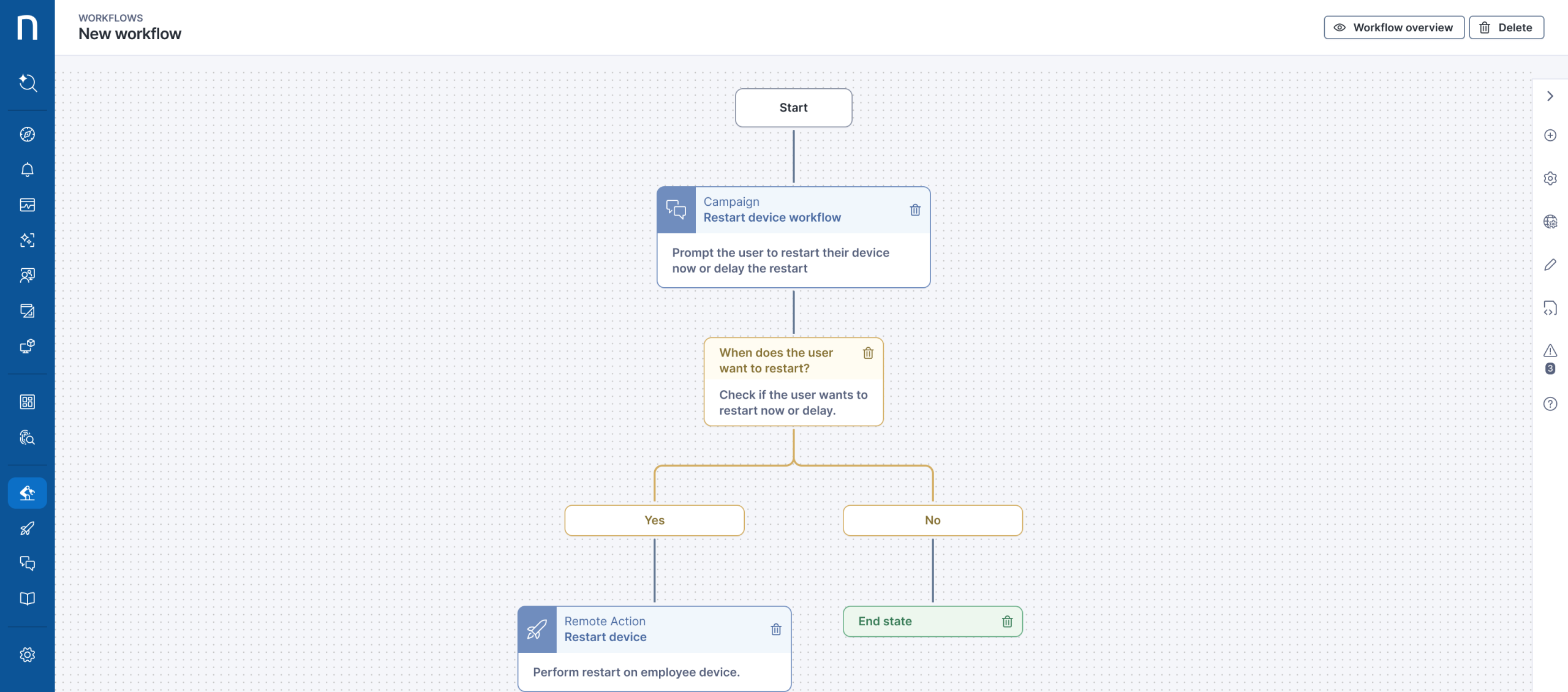
Flow transformed Nexthink from a passive analytics platform into an active remediation engine.
Lead Product Designer
Led the 0 to 1 of Nexthink’s first low-code orchestration product, evolving the platform from passive monitoring into an active, enterprise-grade remediation engine. Owned the full design lifecycle from discovery to launch, working in close partnership with 1 Product Manager and 8 Engineers to define the product vision, interaction model, and experience.
Impact
Context: Historically, Nexthink focused on analytics and telling IT teams what was wrong. The business opportunity was to close the loop. We needed to move from diagnostics to resolution.
Problem: IT teams were overwhelmed with repetitive tickets (e.g. VPN drops, password resets). Existing tools were polarised, too technical, and required senior engineers to write PowerShell scripts. Second, it is too rigid and offering only pre-defined actions with no flexibility.
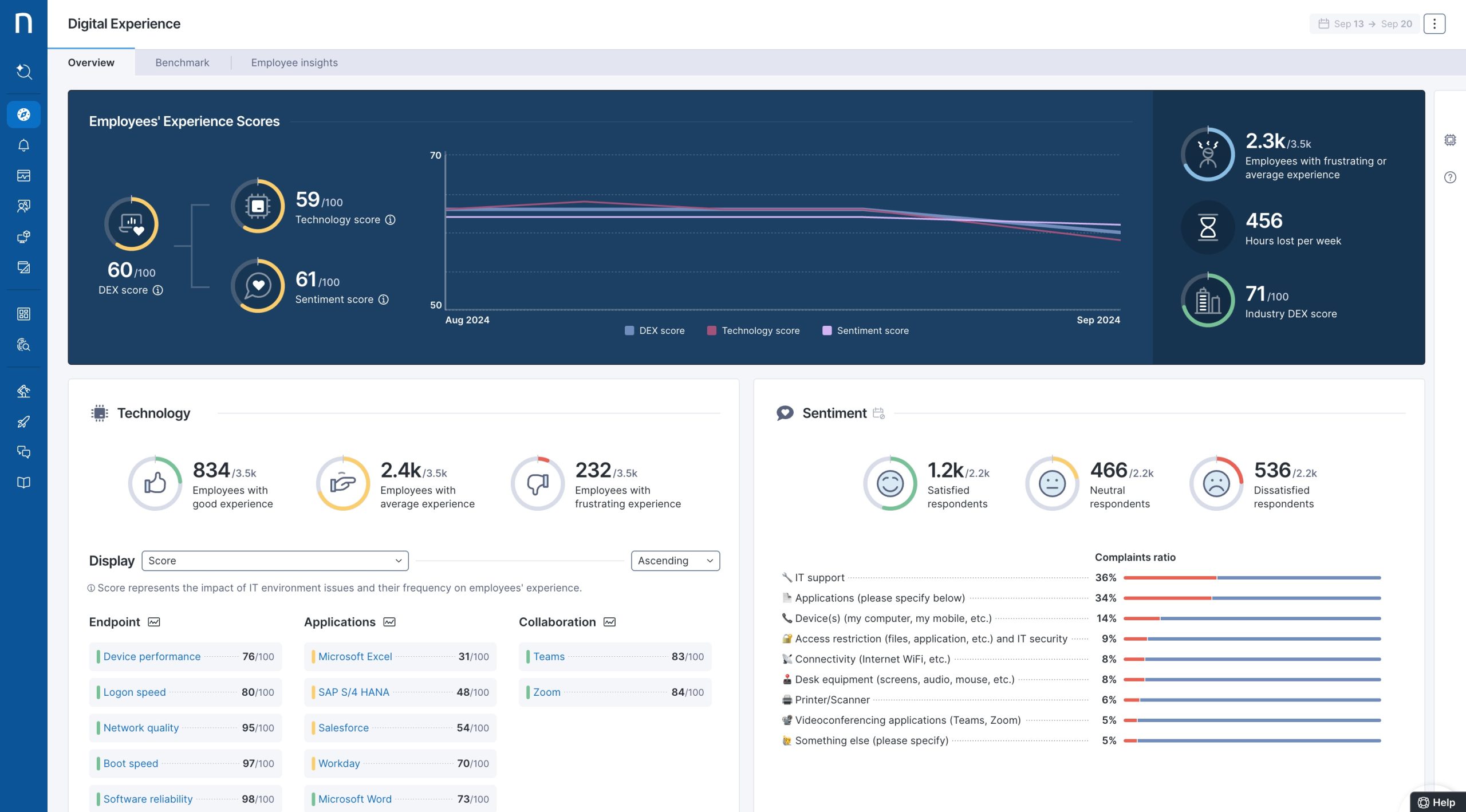
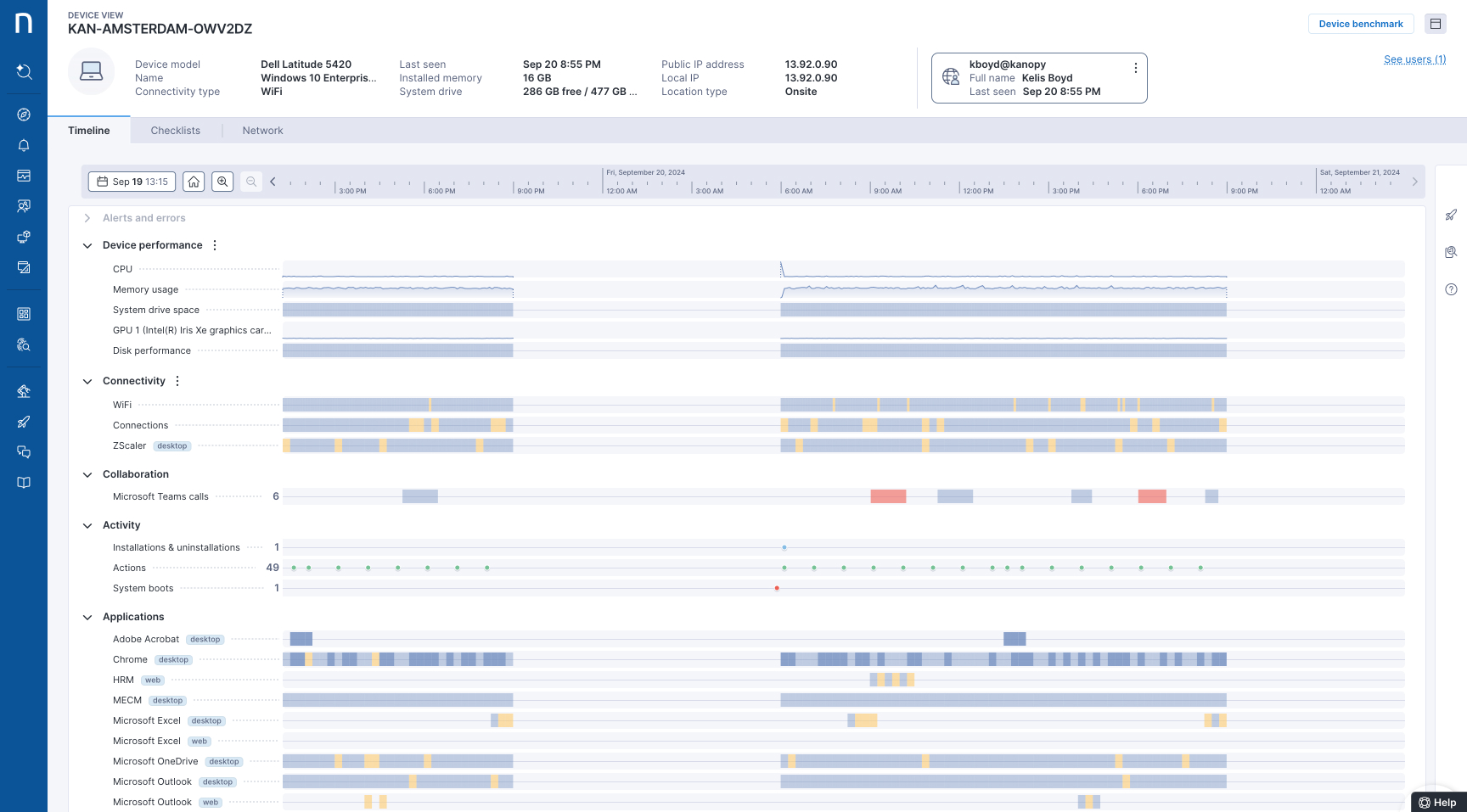
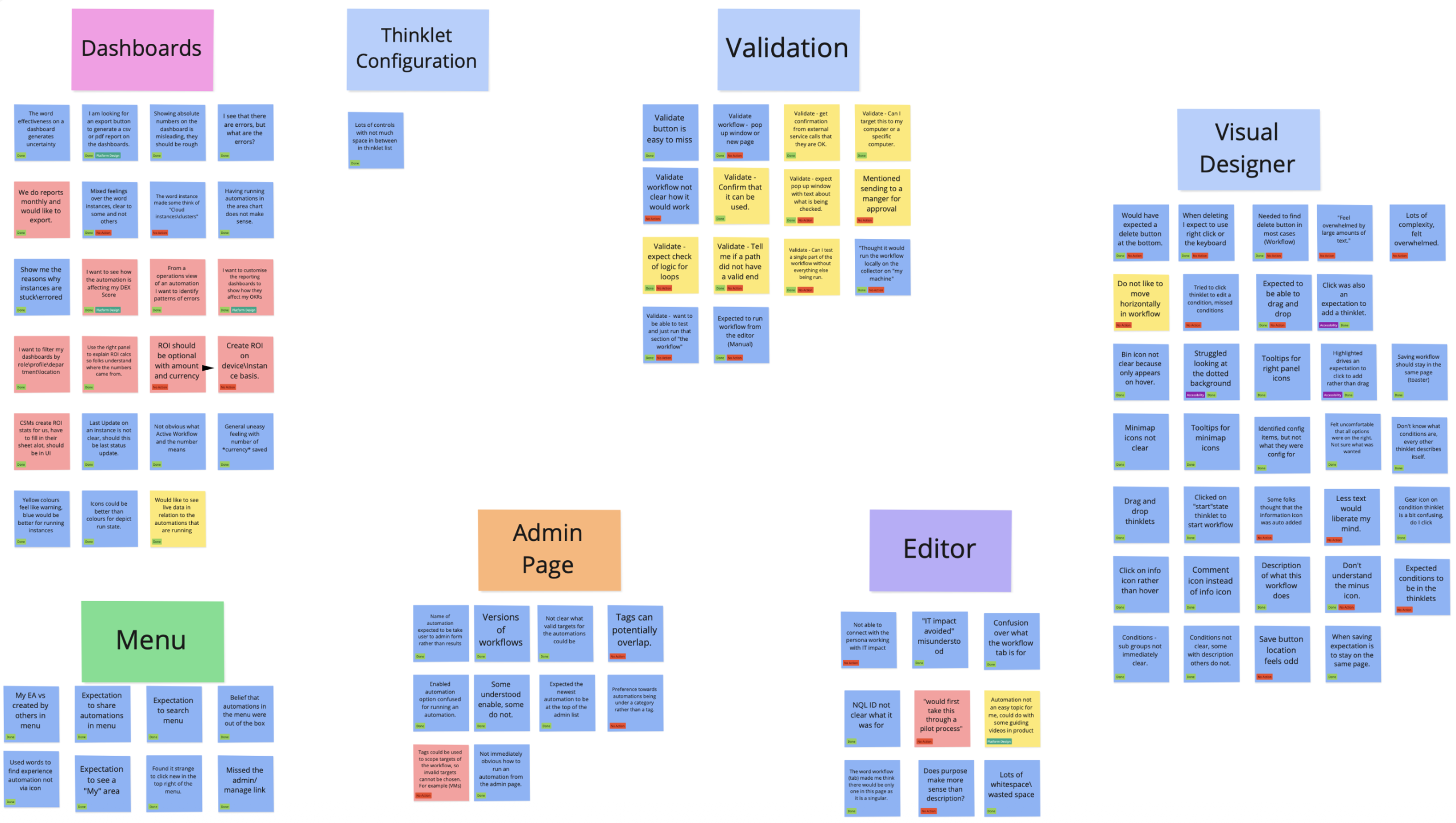
To ensure we solved the right strategy, I led a discovery phase involving 30+ interviews and monthly validation sessions with our enterprise partners.
We analysed five distinct users, ranging from IT Directors to L2 Engineers, to design a single platform that could satisfy their opposing technical needs.
Key Insights
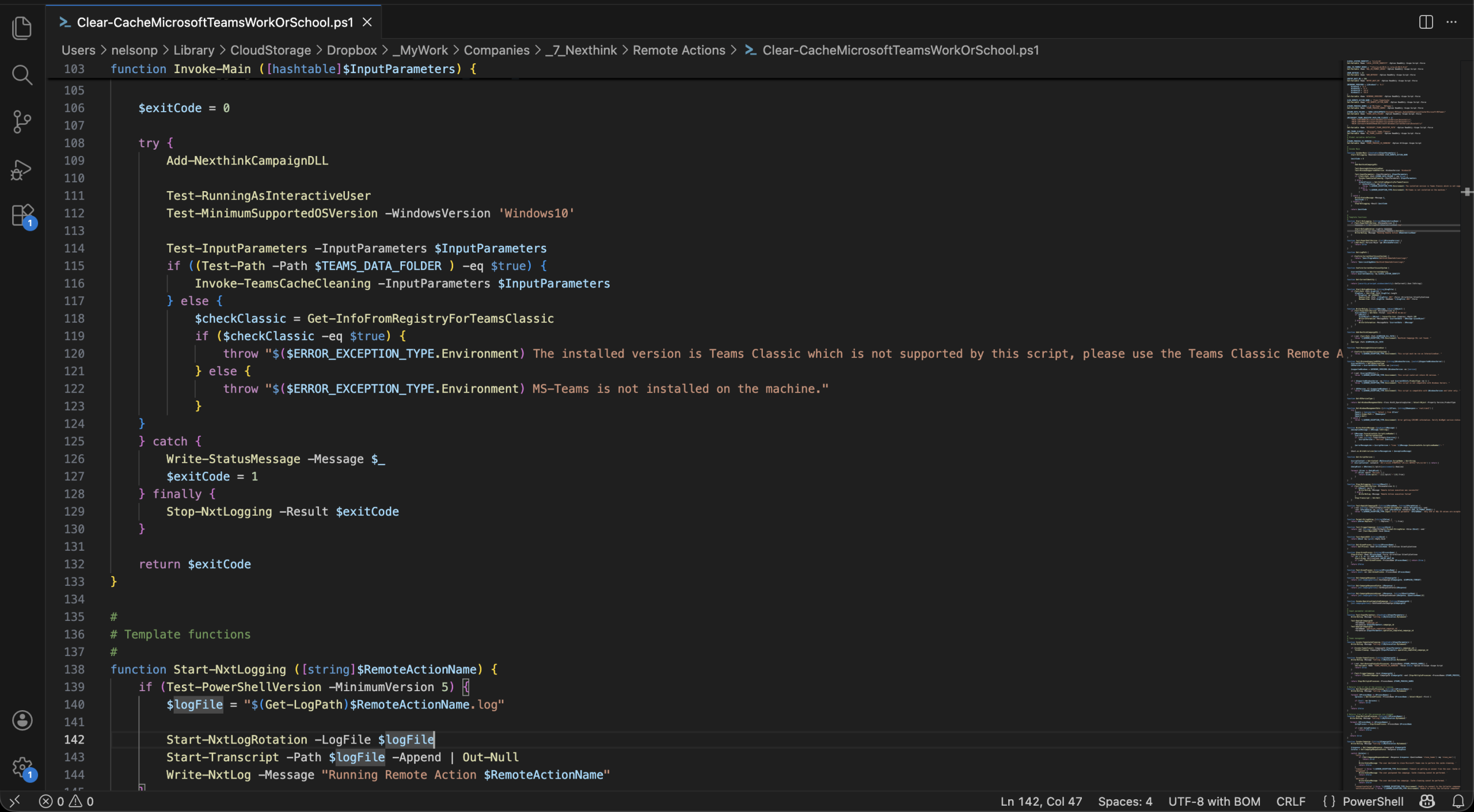
L2, L3 Engineers
Relies on complex PowerShell scripts.
Pain: Powerful but hard to maintain and impossible to scale without hiring senior engineers.
Service Desk Lead
Needs to automate routine tasks instantly.
Pain: Needs a “low-code” environment that is safe for junior agents to use without breaking production.
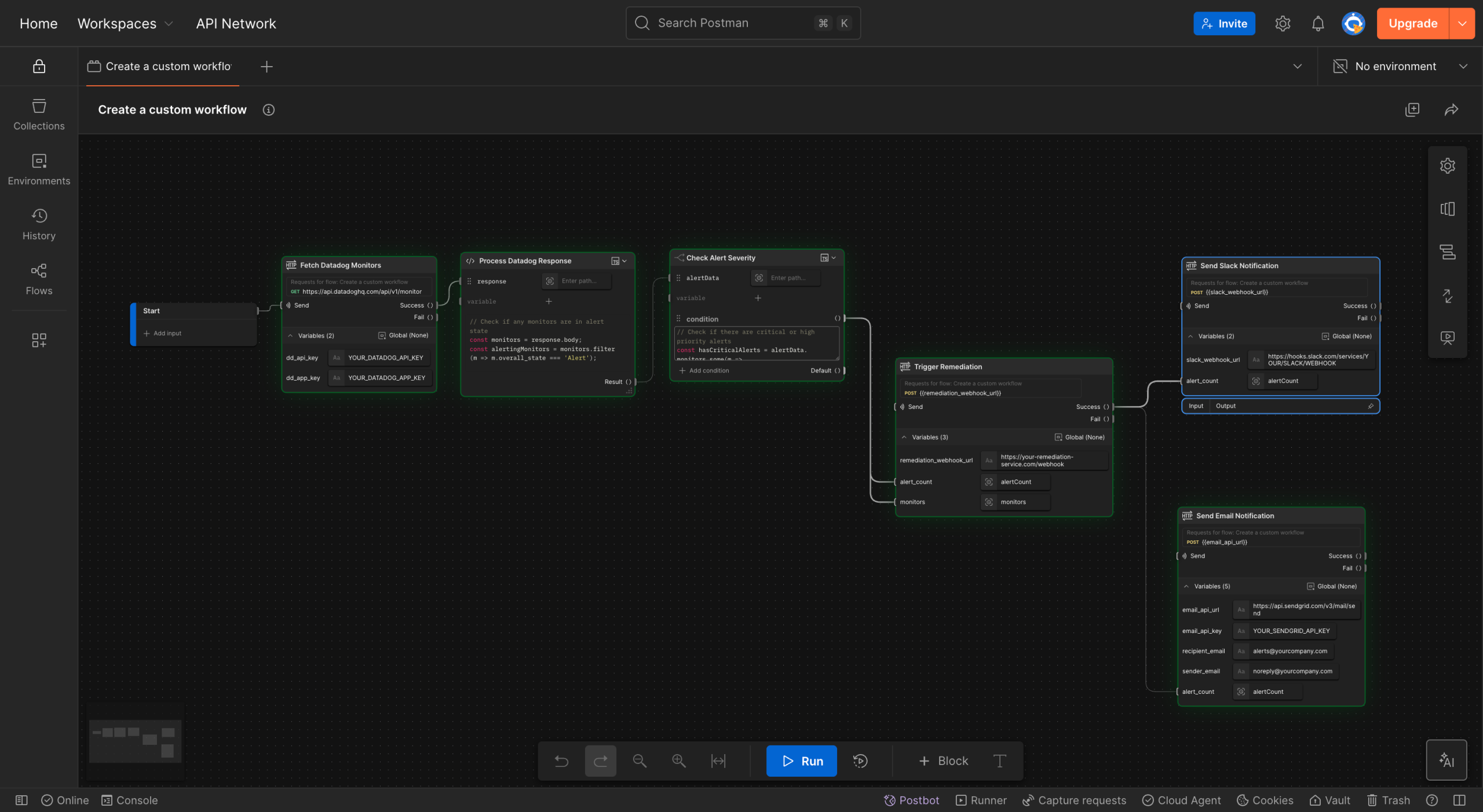
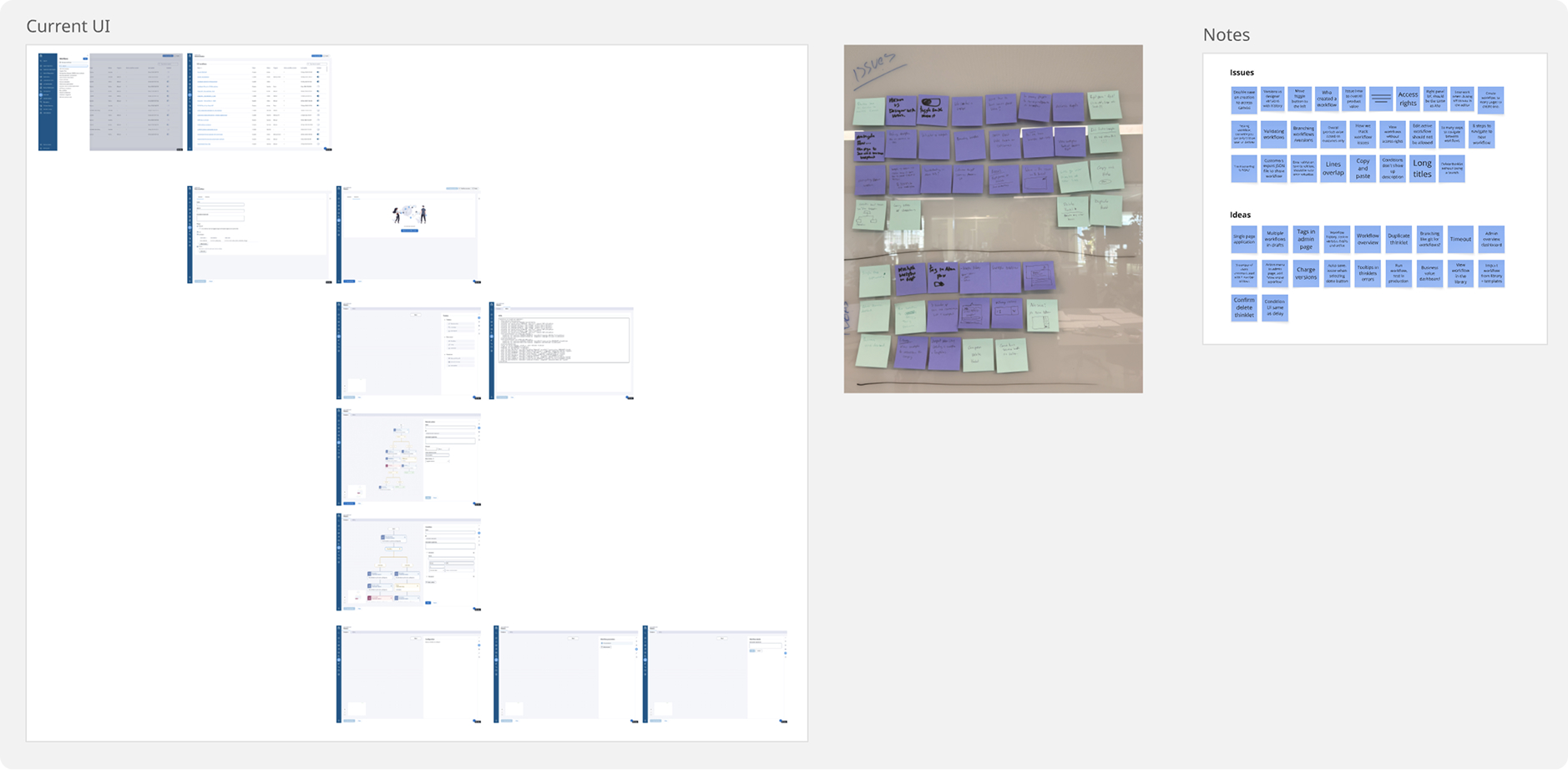
During the early definition phase, we faced a critical architectural conflict. We initially explored a form-based approach because it was faster to build and aligned with standard IT form patterns. However, my prototyping workshops revealed a critical flaw. As workflows grew complex, the linear form collapsed under its own complexity, and users couldn’t visualise the logic flow.
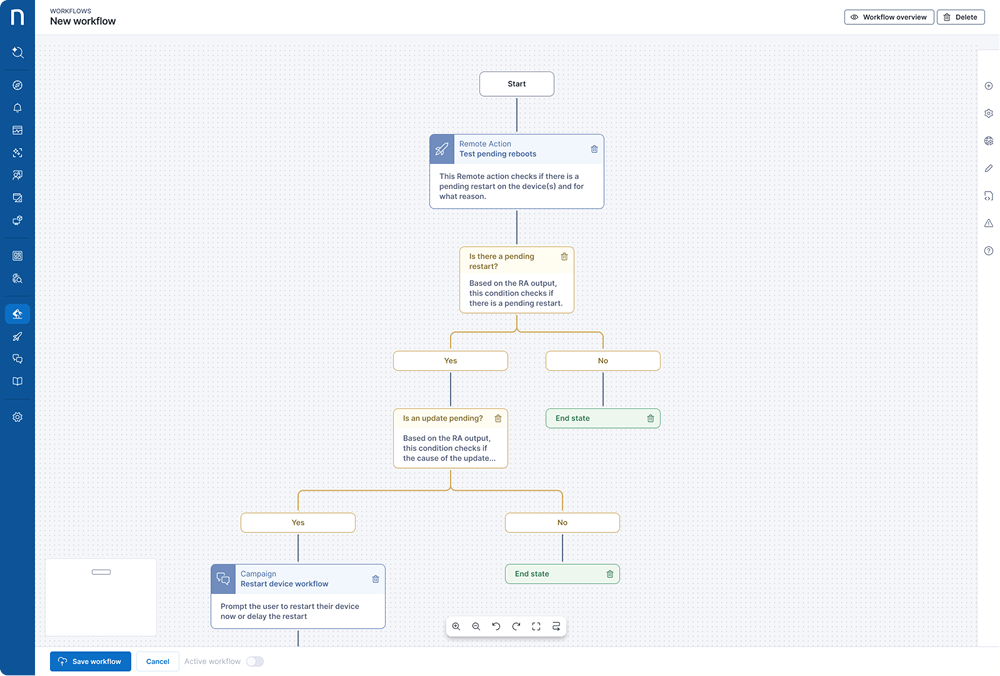
Workshops: I facilitated a “Design vs. Dev” workshop to scope the MVP. We agreed to utilise the ReactFlow library to handle the canvas interactions, allowing us to ship the superior UX without scope creep.
Result: The node-based model aligned perfectly with the IT mental model of troubleshooting trees, creating immediate trust with our technical user base.
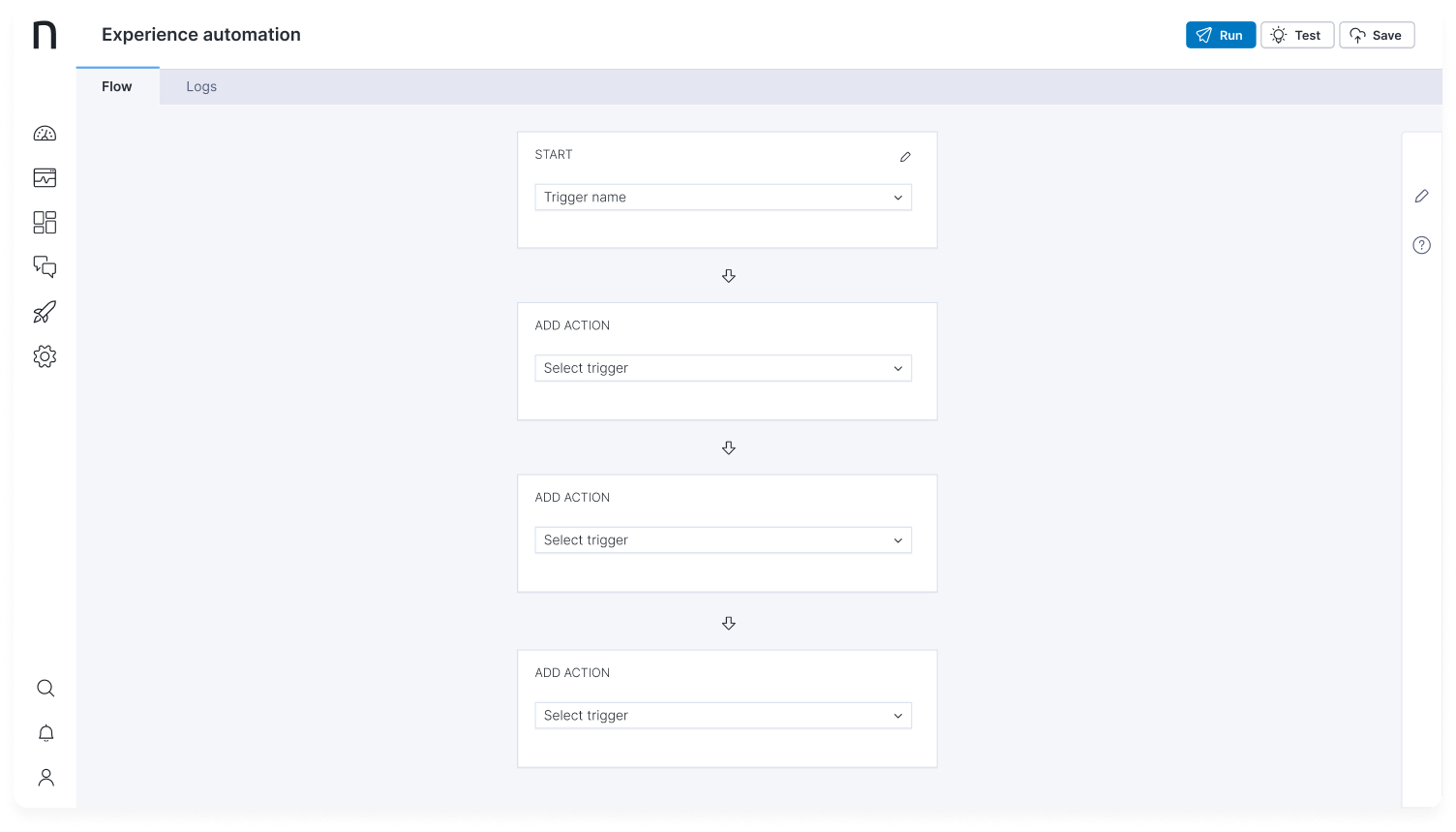
❌ Concept 1 – Linear forms hid the logic.
Why: As workflows grew complex (e.g., “If X, wait 10 mins, then do Y”), users lost their place. It failed to match the user’s mental model of a troubleshooting tree.
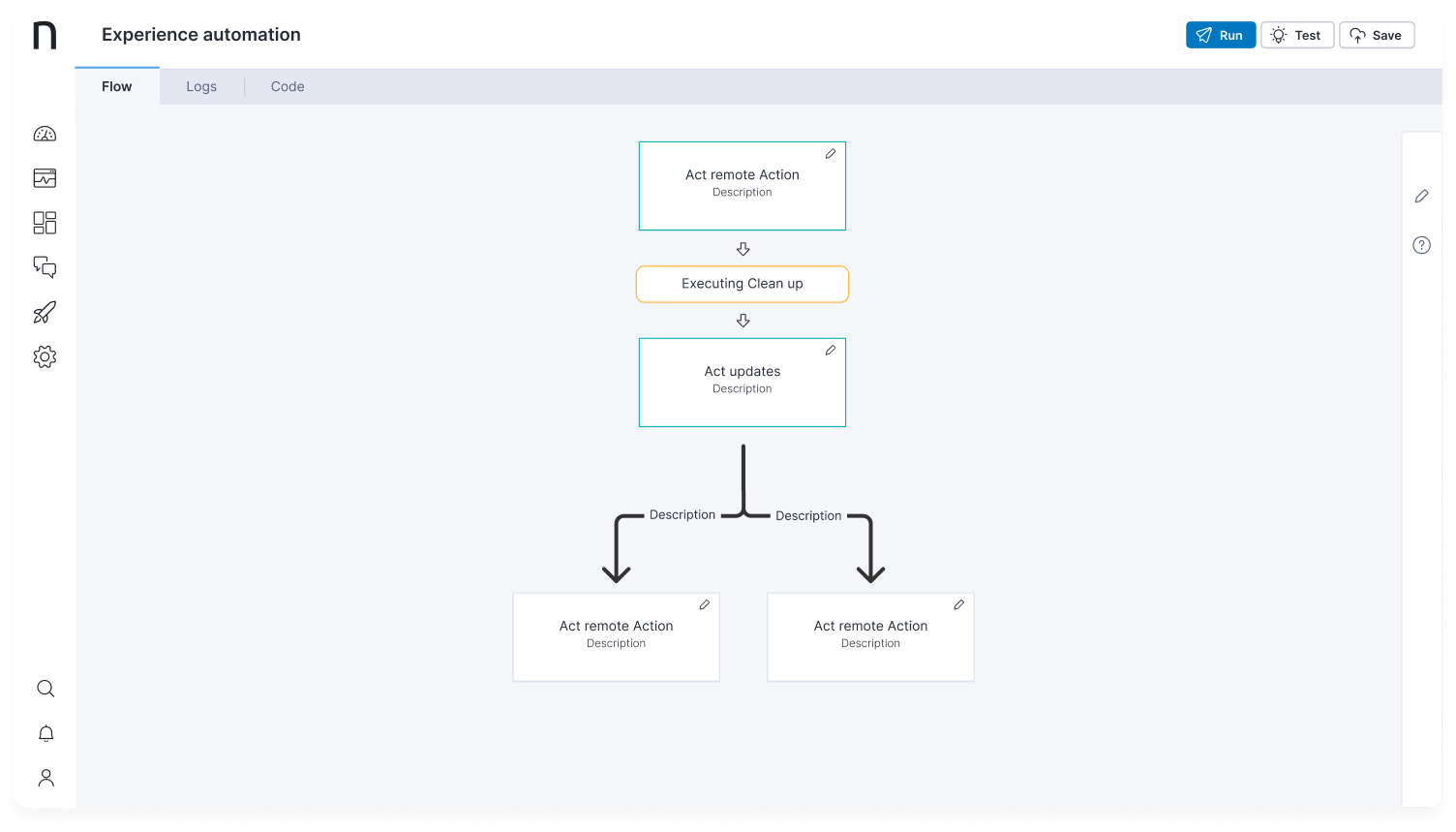
✅ Concept 2 – The Node Canvas exposed the logic.
Why: It visualised the “invisible work” of automation. Users could instantly trace the path of execution, debug errors, and trust the automation.
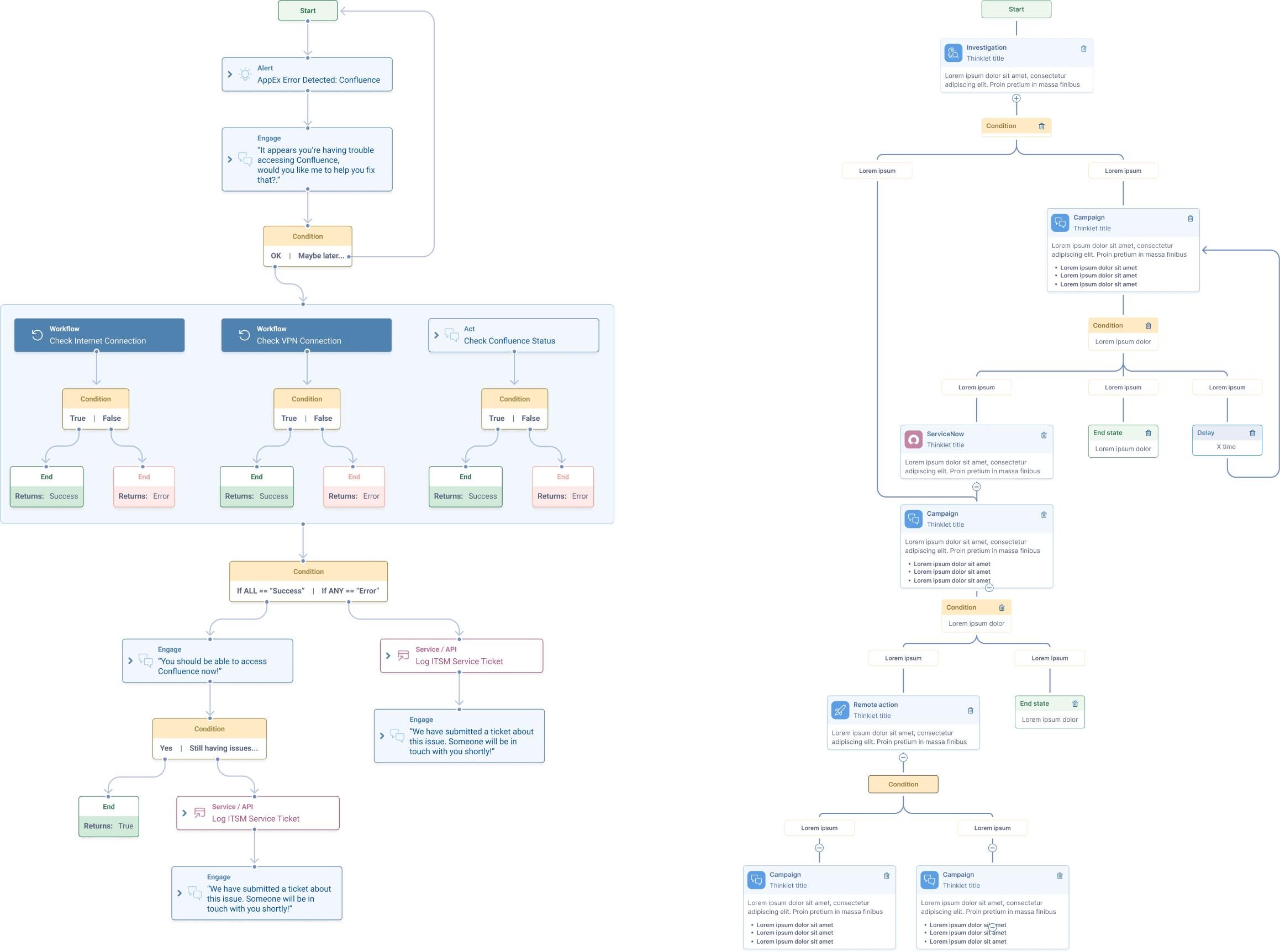
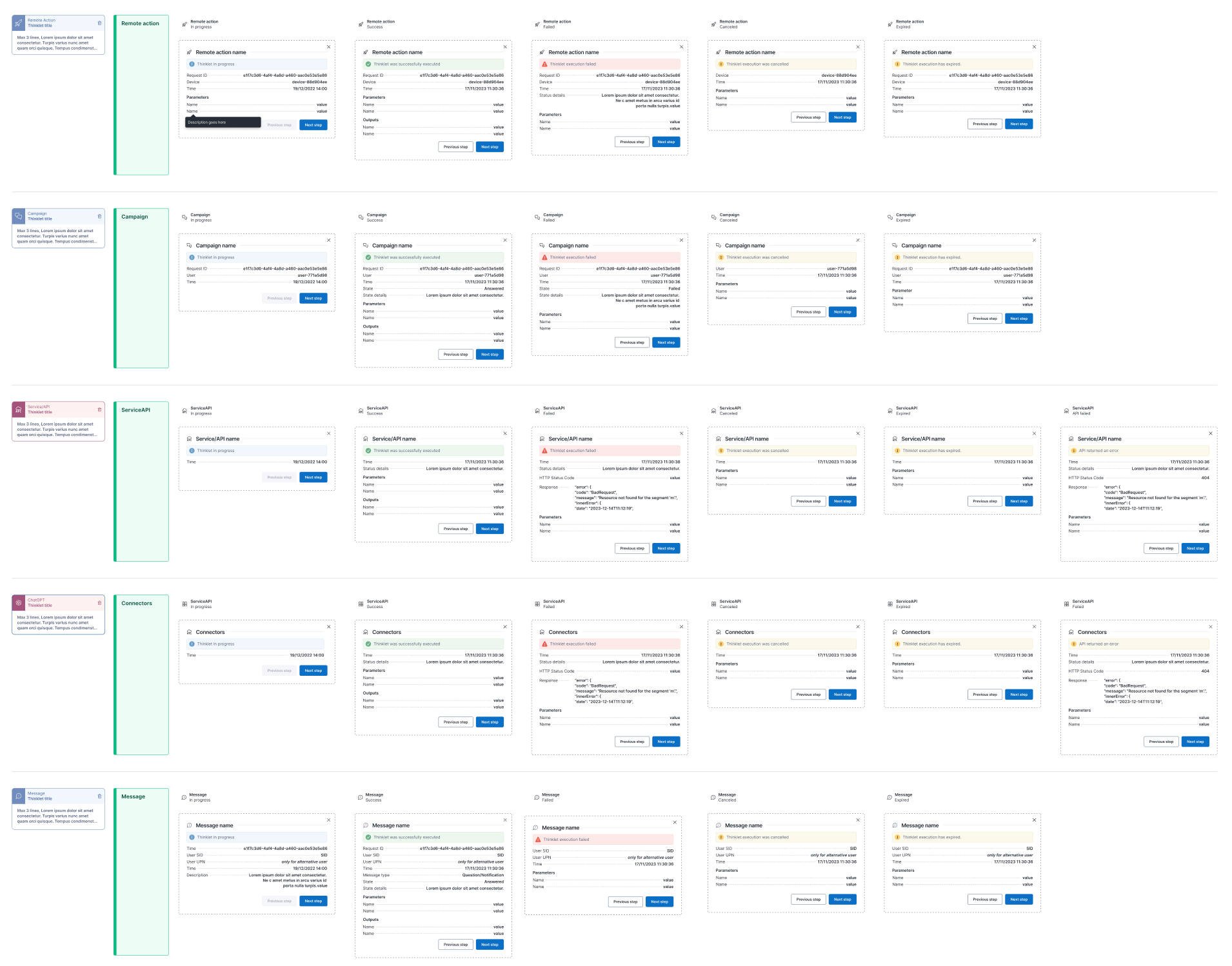
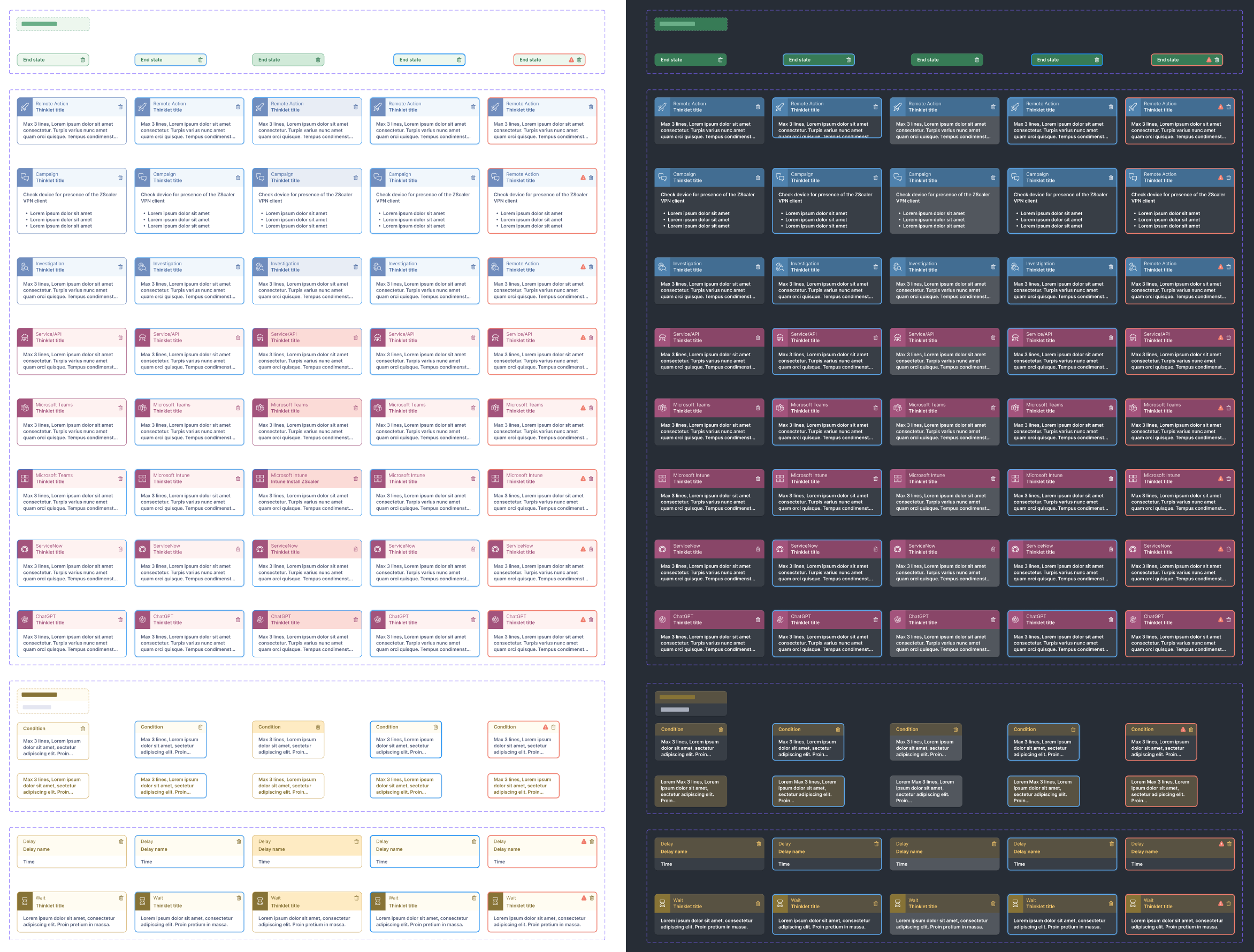
To ensure the platform could scale from 5 to 30+ integrations without creating a design bottleneck, I architected the “Thinklet” framework.
Instead of bespoke nodes for every action, Thinklets are atomic, reusable logic Nexthink blocks with standardised:
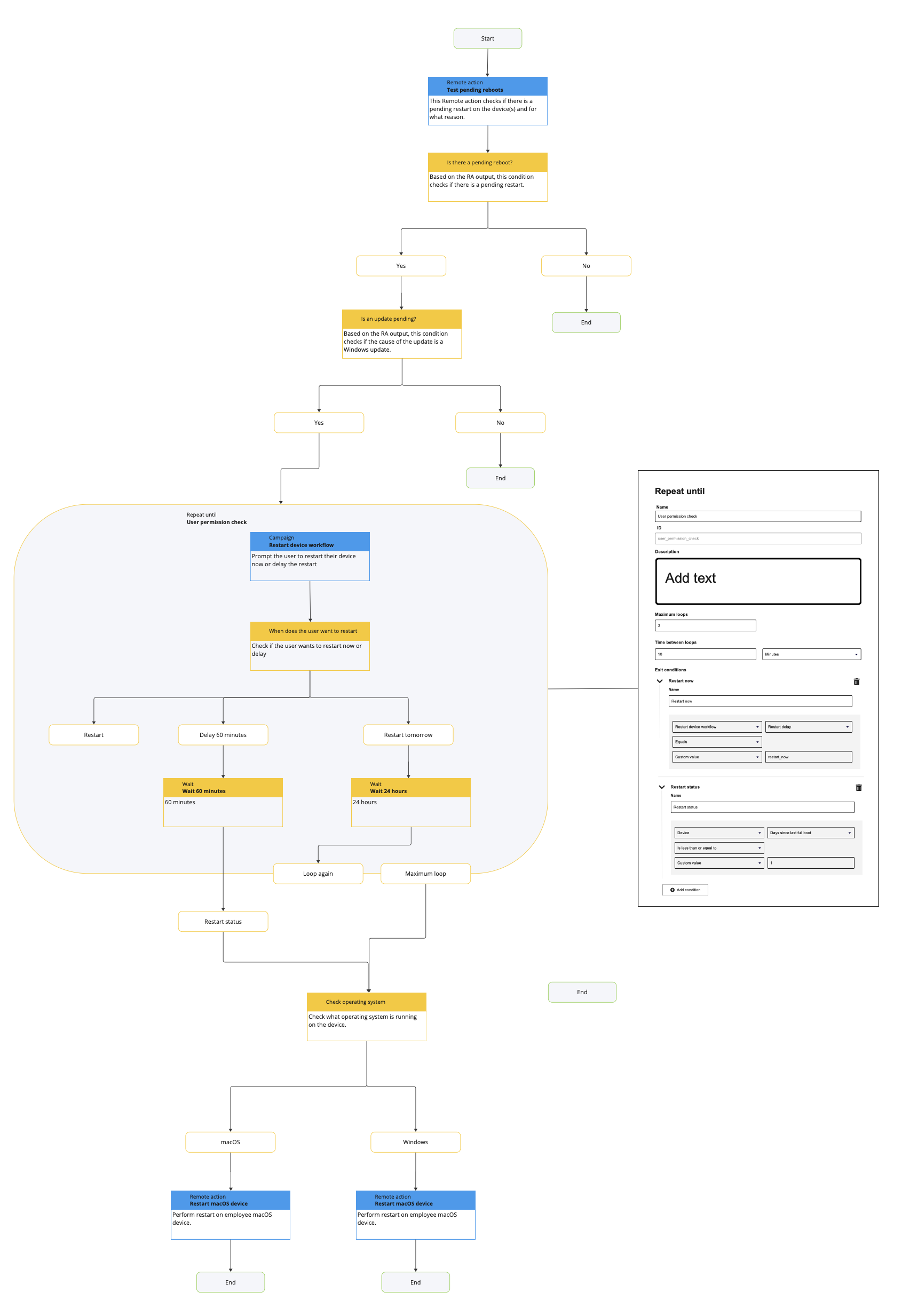
The prototyping logic wasn’t robust enough to simulate state loops and variables. To validate the core interaction model, I stepped outside of design tools and, working with developers, built functional prototypes using ReactFlow. This allowed us to test the actual limits of the engineering library and validate complex logic with users before development began.
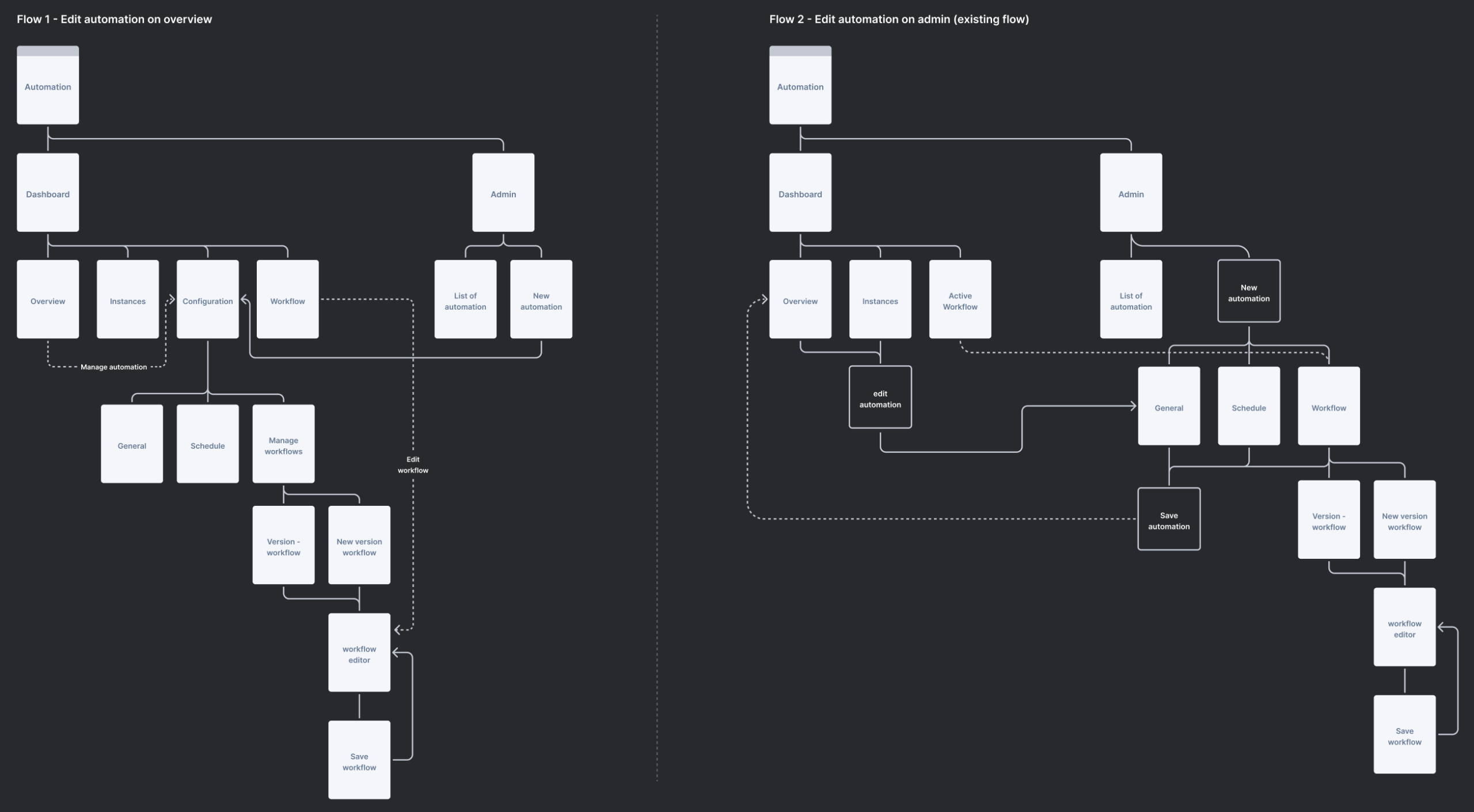
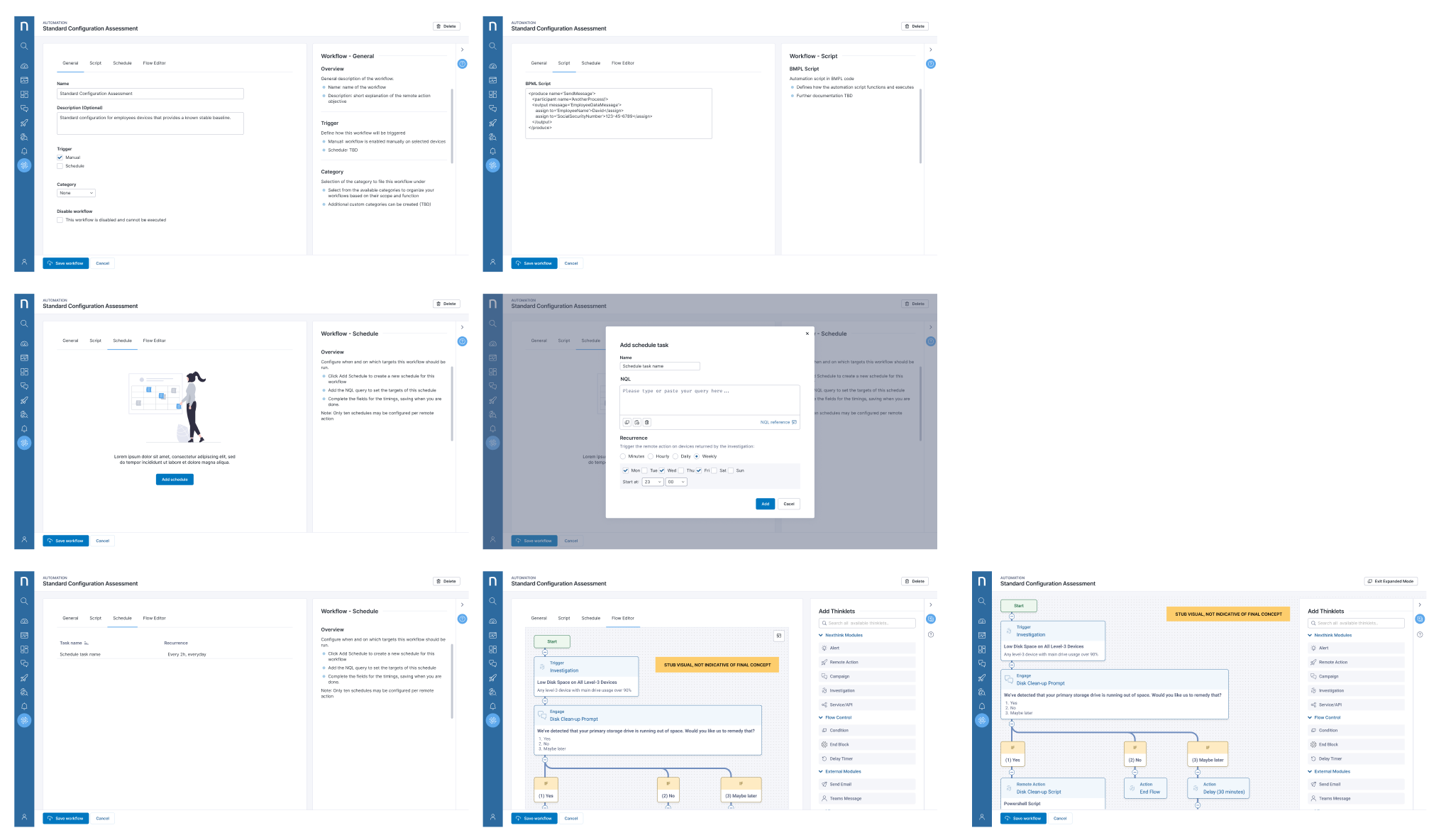
Before committing to full development, I established a feedback loop with 8 enterprise customers to test the interaction model. We moved from static screens to code-based prototypes to validate complex logic.
Thinklets connections
Early testing revealed that as workflows grew, users struggled to distinguish between “Success” paths and “Error” paths visually.
Fix: I introduced a strict visual language for connections: Solid green for success and dashed red for failure/timeouts. This reduced configuration errors by making the logic flow scannable at a glance.
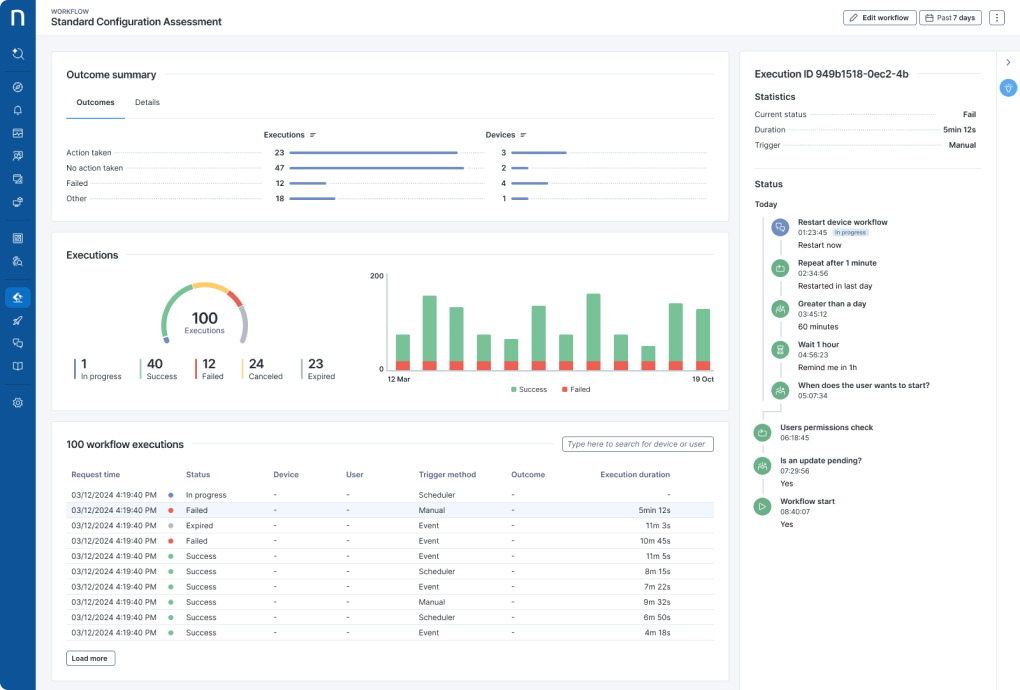
Troubleshooting workflows
Users reported that the results page offered no insight into why a workflow failed or at which step the logic broke.
Fix: I introduced an execution timeline that showed the exact path taken on the device. This allowed users to step through the execution, inspecting the specific inputs and outputs of each “Thinklet” to pinpoint errors immediately.
Flow successfully transformed Nexthink from a passive analytics tool into an active remediation platform. It became the fastest adopted product in company history, empowering IT teams to shift from reactive fixes to proactive automation.
“Flow fixes much broader issues than our VPN mismatch with a lot greater downstream benefits.”
Chris OrdStaff IT Engineer, Qualcomm
Industry Recognition Winner: CRN 2024 Tech Innovator Award
Recognised for revolutionising IT Infrastructure Monitoring & Management. In its first year, Flow was cited for “technological ingenuity” and its ability to help EUC teams save millions in operational costs globally.
Prototyping drag-and-drop slowed down our initial testing, and moving to code-based prototyping (ReactFlow) earlier would have accelerated our validation phase. By involving L2 engineers in the early “Form vs Node”, they became internal champions for the product launch, driving the fastest adoption in company history.